As early as the 4th century BC, diamonds were highly sought after by royalty and the wealthy, prized for their unmatched hardness and dazzling allure. Today, diamonds have become a universal symbol of love and marriage. Let’s explore how to choose the perfect diamond for yourself.
1. Determine Your Budget
The price range for diamond engagement rings is vast, so the first step is to figure out your budget! Only you can answer this question. Once your budget is clear, you can significantly narrow down your search for a loose diamond and compare options within that price range.
2. Round Diamonds vs. Fancy-Shaped Diamonds
While round diamonds are the most common, all other shapes—such as heart, pear, square (princess/cushion), marquise, and oval—are collectively known as “fancy shapes.” You will notice that the majority of diamonds on the market are still round, with fancy shapes making up only a small fraction of the total.
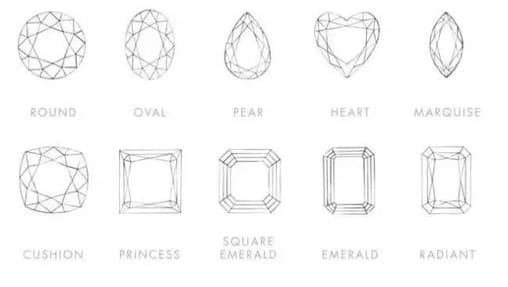
When comparing a round diamond and a fancy-shaped diamond of the same size, the round diamond is more expensive. This is because cutting a round diamond results in greater material loss. The loss rate during the cutting and polishing of a round diamond is as high as 47% (leaving only 53% of the original weight), whereas fancy shapes retain 55%–60% of their carat weight. This explains the price difference!
Compared to fancy shapes, round diamonds better stand the test of time; they are not only classic but also offer a wider variety of setting styles. They are essentially a “universal” choice, suitable for all kinds of jewelry designs. Furthermore, the round cut best showcases a diamond’s “fire” (dispersion of light) and enjoys the highest level of public acceptance, resulting in greater market liquidity.
You might wonder: which is better, round or fancy-shaped? From an investment perspective, round diamonds are preferable as they hold their value and appeal over time; from a fashion perspective, fancy-shaped diamonds offer more individuality and character.
3. Understand the Diamond “4Cs”
The “4Cs” quality standard was established by the GIA and serves as the global benchmark for diamond grading. Understanding the 4Cs makes it easier to decide which diamond to buy. But which of the 4Cs is most important to you? Let’s take a look at what they are.
Carat Weight
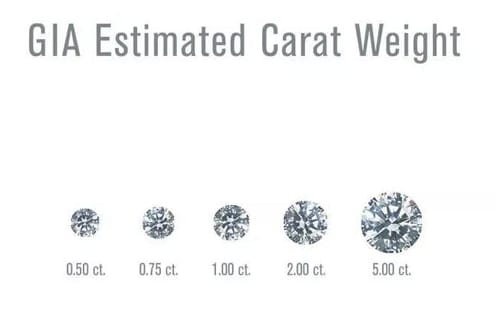
Carat weight is the unit of measurement—expressed in metric carats—used to indicate a diamond’s weight, mass, or size (1 carat = 0.20g). Naturally, the relationship between price and weight is not simply linear; significant price jumps—known as “carat premiums”—occur at whole-carat thresholds.
Color
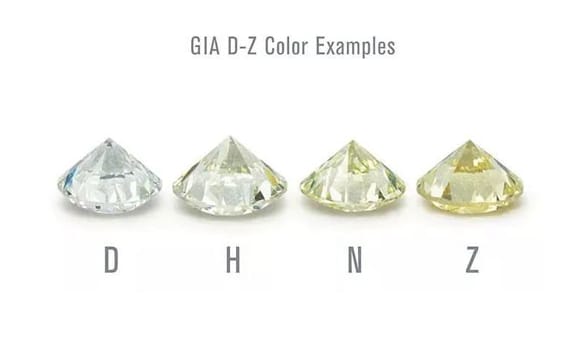
Within the D-to-Z color scale, the less color a diamond has, the rarer and more valuable it is. The GIA established this scale, ranging from D (colorless) to Z (showing noticeable yellow, brown, or gray tints). Generally, colorless diamonds command higher prices than those with visible color—though fancy-colored diamonds are, of course, a different category entirely!
Clarity
Clarity refers to the presence of internal inclusions and surface blemishes. While no natural diamond is absolutely flawless, higher clarity generally translates to higher value.
Cut
The way a diamond’s facets interact with light depends on the quality of its cut. In fact, the quality of the cut directly influences a diamond’s fire and brilliance; a well-cut diamond maximizes light reflection and refraction, resulting in a more dazzling, radiant appearance.
4. Choose the “C” That Matters Most to You
Once you have set a budget and understand the factors determining diamond quality, you can decide which “C” is most important to you. This helps narrow down your selection of loose diamonds.
Many people want a diamond ring that looks substantial in size. If visual size is your priority, then carat weight is the most important “C.” Of course, certain setting styles can also alter the visual impression of size.
If a diamond’s lack of color appeals to you most, then color is the “C” to focus on. Platinum and other white metals can accentuate the colorless quality of diamonds graded H or higher.
If you prefer a diamond with greater clarity, then clarity is your most important “C.” However, keep in mind that inclusions in diamonds graded SI1 or higher are not visible to the naked eye.
Finally, many industry professionals consider cut to be the most critical of the 4Cs, as it dictates brilliance, fire, and scintillation. If you desire a diamond that truly sparkles and shines, then cut is the most important “C” for you. 5. Leverage the Power of Certification
Diamond grading reports are essential tools for evaluating loose diamonds, as they provide details regarding the “4Cs” (Cut, Color, Clarity, and Carat weight). These reports also indicate whether a diamond is natural or synthetic, and whether it has undergone treatments to enhance its color or clarity. Having this information gives you greater confidence when making a purchase.
Grading standards vary among different laboratories. Common diamond certifications include the GIA (USA), NGTC (China), and IGI (Belgium). While these reports all offer insight into a diamond’s quality, the GIA report holds the most prestige and widespread recognition within the diamond trade. These reports allow you to see the diamond’s 4C specifications at a glance.