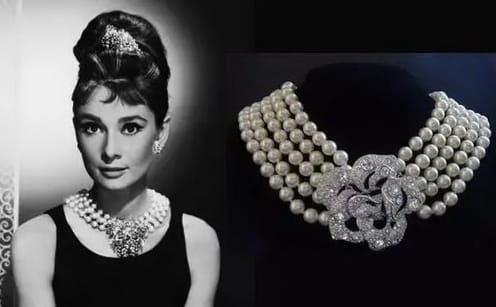
Pearls—ancient organic gems—have been highly sought after for millennia and continue to hold a position of supreme prestige today. With their soft hues, radiant luster, and exquisite texture, pearls come in a variety of shapes, each exuding an aura of elegance, uniqueness, and style.
However, many people feel overwhelmed when trying to compare quality and price while shopping for pearls. In fact, by understanding a few key factors, the challenge of selecting the perfect pearl becomes simple!
Pearl Size
Like other gemstones, pearls of comparable quality increase in value as their size increases. Internationally, pearls are categorized into four size grades: large (diameter >8mm), medium (6–8mm), small (5–6mm), and “seed” or *xili* pearls (under 5mm); pearls exceeding 10mm in diameter are collectively classified as “large-format” pearls. As the saying goes, “seven is rare, eight is a treasure”—the larger the pearl, the scarcer it is, and consequently, the greater its value for collectors.
Pearl Shape

Pearl shape refers to the external form of the pearl. These are broadly categorized into regular and irregular shapes, which can be further broken down into seven specific types: round, semi-round, button, teardrop, semi-baroque (asymmetrical but with a recognizable form), and baroque (completely irregular). Generally, perfectly round pearls command the highest prices.
Pearl Color
Pearl color consists of three components: body color, overtone, and orient. Body color is the dominant overall hue, such as white, black, or gold. Overtone is a translucent color layer visible over large areas of the pearl’s surface; this subtle feature requires careful observation and can influence the price. For instance, a peacock-green overtone adds value to a black pearl, whereas a green overtone on a yellow pearl tends to lower its value. Orient refers to the play of multiple translucent colors or a rainbow-like shimmer on the surface. Distinguishing these nuances requires a trained eye.
Pearl Luster
Luster refers to the intensity of light reflected from the pearl’s surface and the clarity of the reflection—often called “skin luster” or “pearl glow”—and it significantly impacts the pearl’s value. The higher the quality of the luster, the greater the value. Luster can be categorized as: excellent, strong, medium, or weak. To evaluate a pearl’s luster, examine it under a strong overhead light and observe the clarity of the light’s reflection on the surface; the sharper the reflected image, the better the luster.
Pearl Surface Quality
Surface quality refers to the nature and number of blemishes or irregularities on the pearl. As natural products, few pearls are entirely free of imperfections. Surface quality is typically described as “flawless,” “lightly blemished,” “moderately blemished,” or “heavily blemished.” Naturally, the more flawless the pearl, the higher its value.
Nacre Quality
The thickness of the nacre (the pearly substance) is a crucial factor in determining a pearl’s value. Generally, thicker nacre results in stronger luster and superior quality. Gem-quality pearls typically have a nacre thickness of at least 0.3mm.
Pearl Matching
Pearls are used in a wide variety of jewelry, yet selecting a strand or a pair of pearls with consistent quality is no easy task. A higher degree of matching makes the piece even more precious. For jewelry featuring multiple pearls, an “excellent” quality rating requires that all pearls look uniform and that the drill holes are perfectly centered.
Additionally, it is important to note that some cultured pearls undergo artificial treatments to enhance their appearance. Processes such as heating, dyeing, irradiation, and coating may be used to alter or improve a pearl’s color. Therefore, when purchasing pearls, look for authoritative certification reports from professional institutions to effectively avoid unnecessary risks.
Pearl Care
Having covered the factors for selection, let’s discuss pearl care. First, keep pearls away from corrosive compounds; avoid prolonged exposure to water and, especially, oil. Oil and grease are detrimental to the maintenance of all types of jewelry; for organic gems like pearls, oils can easily penetrate the surface, causing a loss of luster and accelerating yellowing. Furthermore, pearls have relatively low hardness and scratch easily, so keep them away from hard objects to prevent knocks or impacts. Finally, pearls are sensitive to high temperatures; prolonged exposure to heat can cause them to lose moisture and dry out. After wearing them, wipe the cleaned pearls dry with a soft cloth and store them separately in a jewelry box.