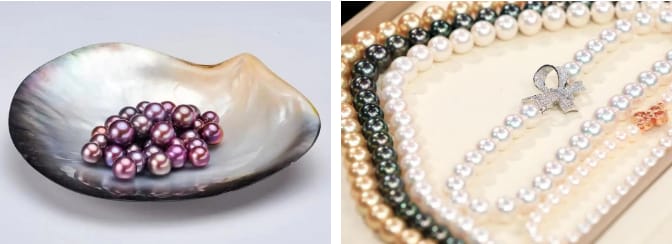
The scorching sun and intense heat test not only people but also gemstone jewelry! Beyond high temperatures and sunlight, cosmetics, perfumes, and even sweat can damage gemstone jewelry. As summer arrives, enthusiasts need to take extra care of their pieces—especially organic jewelry.
Organic gemstones are typically formed through the biological activities of living organisms. For instance, pearls grow when a mollusk (such as an oyster) is irritated by a foreign object; coral is created by the accumulation of coral polyp skeletons over time; and amber forms when resin secreted by coniferous trees undergoes fossilization.
Because they contain organic components, most organic gemstones have low hardness and poor resistance to acids, alkalis, and heat; compared to other types of jewelry, they require greater care and maintenance from the wearer. Today, let’s discuss the daily care of three major types of organic jewelry: pearls, coral, and amber.
Pearls
Pearls are a common organic gemstone with low hardness; they are composed primarily of calcium carbonate, with small amounts of magnesium carbonate. Their surfaces can easily lose their luster due to friction, and exposure to acidic solutions—to any degree—can cause damage. Pearls feature a layered, shingle-like surface structure containing numerous tiny pores; prolonged contact with acidic substances like cosmetics, perfume, or sweat causes them to yellow and lose their shine. Since human sweat is mildly acidic, pearls should be wiped clean after wear before being stored in their box. Additionally, pearls must be kept away from heat sources. Proteins and water are vital components of pearls; high heat causes moisture to evaporate and proteins to degrade, severely damaging the pearl’s structure—leading to discoloration and dullness in mild cases, or complete fracturing in severe ones. High temperatures can also cause the adhesives used in pearl settings to dissolve or deteriorate, potentially causing the pearl to fall out. Furthermore, it is best to avoid wearing pearls in environments with poor air quality, as oily fumes and vapors can penetrate the pearl and cause discoloration.
Coral
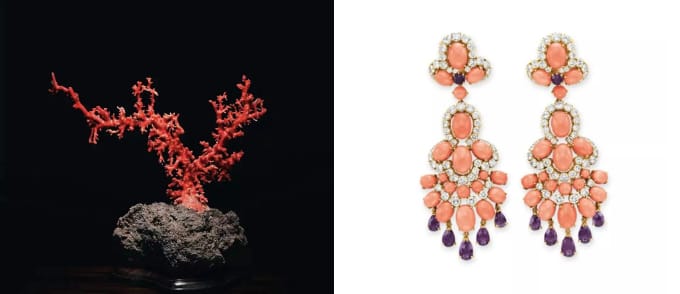
Coral is also primarily composed of calcium carbonate, making it susceptible to corrosion by acids. It is particularly vulnerable to organic solvents, which can affect its organic components and, consequently, compromise its luster and durability. Compared to pearls, however, coral is relatively easier to maintain. First, avoid exposing coral to acidic or alkaline chemicals, and keep it away from high heat and bleaching agents; since color significantly influences coral’s value, heat and bleach can damage the organic pigments, causing fading. Coral has low hardness and is quite brittle; in addition to storing it separately, you should try to prevent it from being dropped or knocked against hard surfaces while wearing it. Coral jewelry should not be soaked in water for extended periods; after cleaning, it should be dried immediately using cool air. You can apply a thin layer of clear oil to the surface of cleaned coral jewelry to create a barrier against air and harmful substances, but ensure you use only fragrance-free and dye-free oils, such as mineral oil or olive oil.
Amber
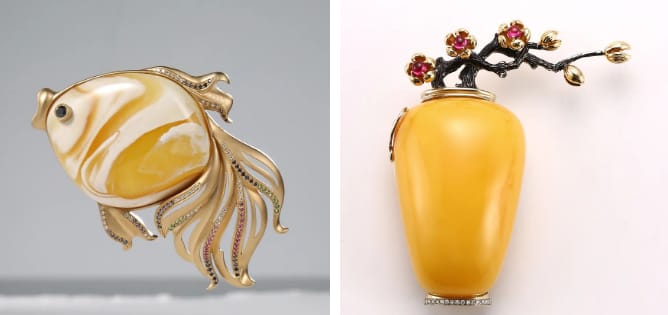
Amber is composed almost entirely of organic matter and is a fossilized natural resin. It is brittle, has a low melting point, and is sensitive to high heat and prolonged sun exposure. Amber is highly sensitive to temperature fluctuations; changes in temperature can alter the volume of inclusions within the amber, leading to internal cracks. High heat can also cause the surface to age, resulting in a dark brown film and surface cracking. Therefore, amber jewelry should be kept out of direct sunlight for extended periods. Amber is also sensitive to light, particularly ultraviolet (UV) rays. UV radiation accelerates aging, causing the surface to become cloudy, lose its luster, and develop micro-cracks. Consequently, avoid exposing amber to intense, prolonged sunlight during the summer. When not in use, wash the amber with warm water, pat it dry with a soft cloth, and store it away from light. You can also apply a small amount of olive oil to maintain the surface.
None of the organic gemstones mentioned above should be worn while swimming or soaking in hot springs; taking these precautions is the minimum level of care you can show for your cherished pieces. Keep these tips in mind to give your organic jewelry extra care during the summer, ensuring it retains its lasting charm and beauty, and continues to be a stunning highlight of your stylish life.