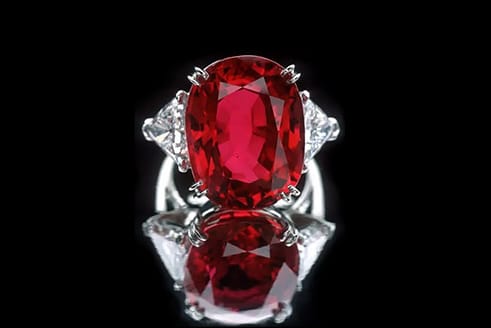
Rubies are a variety of corundum. Major ruby deposits generally fall into three categories: classic marble-hosted deposits (such as Mogok in Myanmar), basalt-associated deposits (such as those along the border between Thailand and Cambodia), and amphibolite-associated deposits (such as those in Mozambique). Today, we will focus on rubies from Myanmar, the most prestigious of these sources.
Burmese rubies hold a significant position in the international jewelry market and are world-renowned for producing “Pigeon’s Blood” rubies. “Pigeon’s Blood” refers to a pure, vivid red color with high saturation; while the term originally applied specifically to rubies from Myanmar, it has since become synonymous with top-quality rubies. The color of high-end Burmese rubies is determined by the interplay of two factors: first, high brightness combined with a pure red fluorescence; and second, the presence of abundant needle-like rutile inclusions. These inclusions scatter incident light across the gem’s surface, imparting a softer, more velvety color—a characteristic rarely found in rubies from other regions.
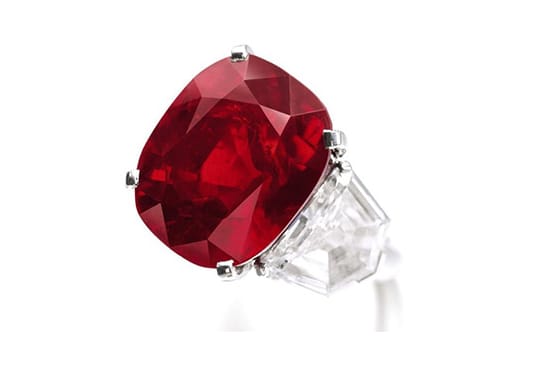
As a historic source of rubies, Myanmar has yielded many large, high-quality stones over the centuries. In May 2015, a 25.59-carat Burmese “Pigeon’s Blood” ruby sold at auction for 26.25 million Swiss francs (approximately US$30.33 million), setting records at the time for both the highest price ever paid for a ruby and the highest price for any non-diamond gemstone. Known as “The Sunrise Ruby,” this gem was formerly part of the Cartier collection; its sale price also set a record for a piece of Cartier jewelry at auction.
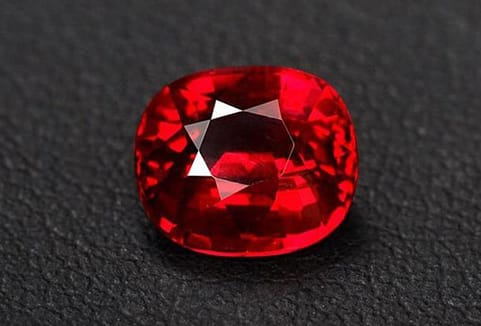
Rubies symbolize love, and the famous “Carmen Lucia Ruby”—a “Pigeon’s Blood” stone—is associated with a deeply moving love story. Like any happy woman, Carmen Lucia Buck loved her husband dearly; she also had a deep fondness for rubies, as their brilliant red hue reminded her of the passion and sunshine of her homeland. Tragically, illness claimed her life prematurely. In 2004, to fulfill her final wish, her devoted husband Peter Buck acquired this magnificent, flawless ruby and donated it to the Smithsonian Institution (the National Museum of Natural History) in her name as an enduring tribute. Weighing 23.1 carats and originating from Myanmar in the 1930s, the “Carmen Lucia Ruby” is one of the largest high-quality, faceted “pigeon’s blood” rubies currently on public display.